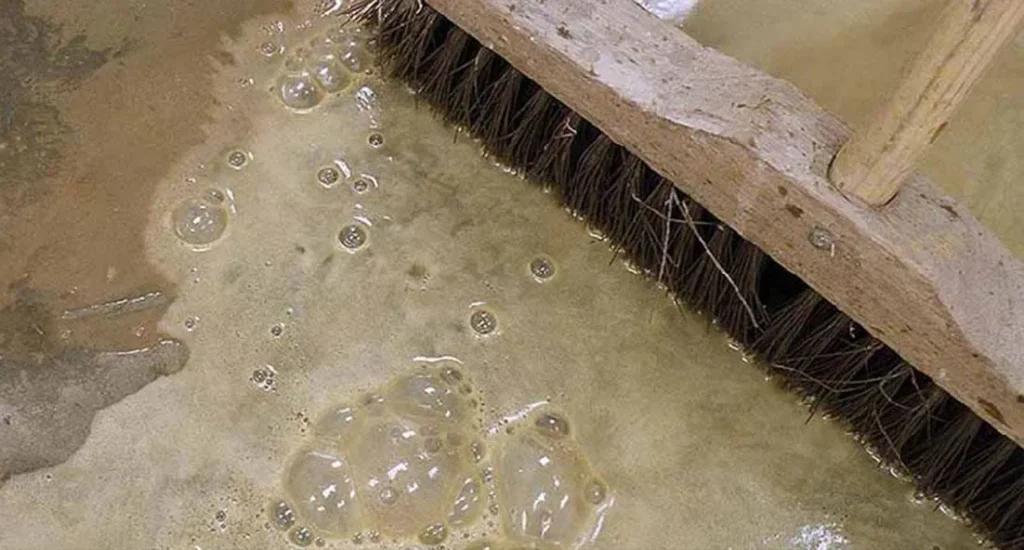
You did everything right.
You spent your weekend cleaning the slab. You etched it with the acid in the kit. You waited the full cure time before parking on it. Maybe you even pressure-washed it twice.
Then six weeks later – or six months, or right after the first cold snap – the coating started peeling. Tire prints. Bubbles. Strips lifting off in chunks.
You’re not the problem. The product was.
Here’s the truth most kit boxes won’t tell you — and exactly what to do now.
The Short Answer
Most DIY garage floor kits fail for three reasons: the concrete wasn’t prepped deep enough, the slab is too wet, and the coating itself is too thin to do the job. We’ll walk through each one in plain English, with the actual numbers from the products themselves. Then we’ll tell you what it really costs to fix.
Reason 1: Acid Etching Can’t Make the Floor Rough Enough
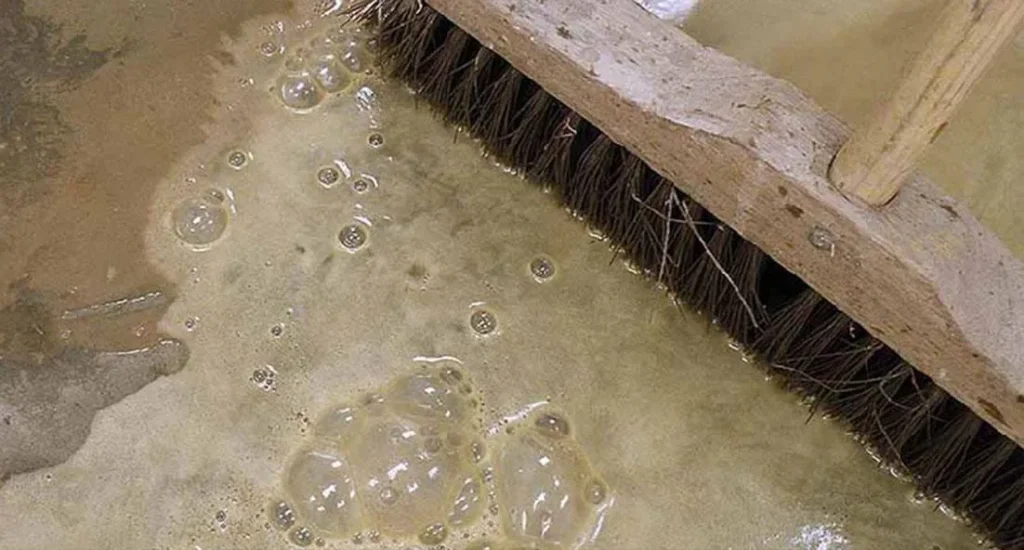
For an epoxy coating to stick, the concrete underneath needs to be rough. Microscopically rough — like coarse sandpaper. The roughness is what gives the coating something to grip.
The flooring industry actually has a standard for this. It’s called the Concrete Surface Profile, or CSP — a 1-to-10 roughness scale set by the International Concrete Repair Institute (ICRI Guideline 310.2R-2013). A pool deck might need CSP-1. A real garage floor coating needs CSP-3 to CSP-5.
Here’s the catch. The acid etch in every DIY kit can only get you to CSP-1 or CSP-2 at best. That’s two full grades below what epoxy needs to bond properly. It doesn’t matter how carefully you etched. It doesn’t matter how many times. Acid simply can’t open the concrete pores enough.
Professional installers use a 175-pound diamond grinder to take the surface down to CSP-3 minimum. There’s no shortcut. If your floor wasn’t ground, the coating was already failing the day you rolled it on. You just couldn’t see it yet.
Reason 2: Your Slab Is Wetter Than You Think
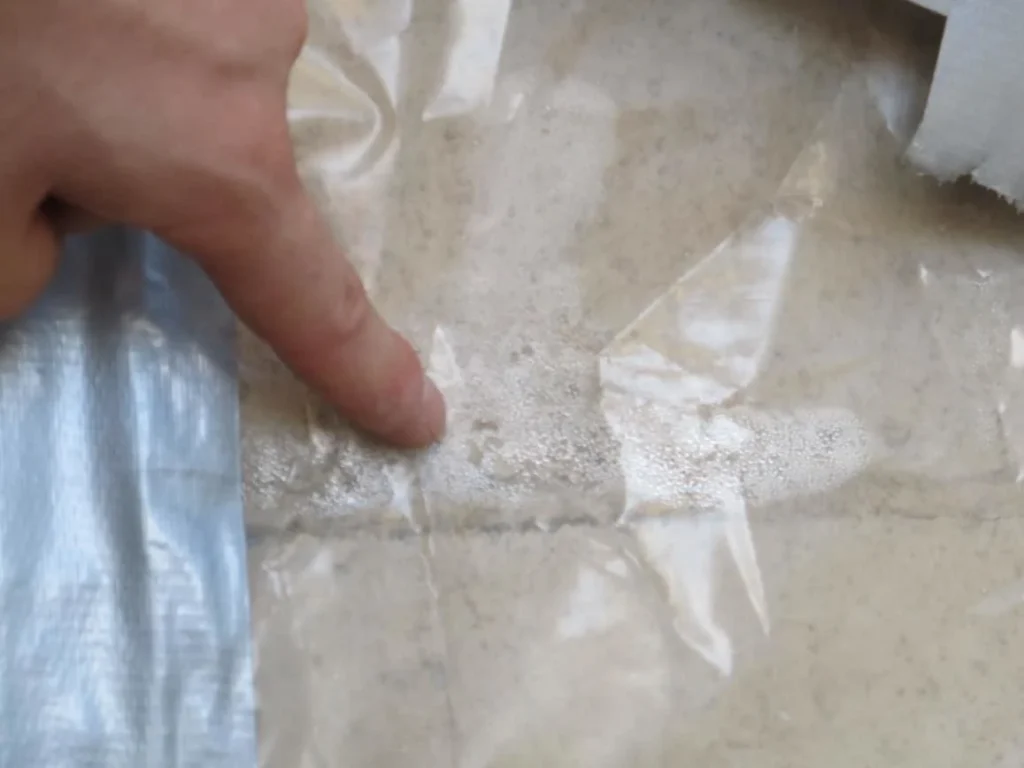
Concrete looks dry on top, but it’s not. Slabs sit on dirt. Water vapor rises out of that dirt 24 hours a day, pushing up through the concrete. Engineers call this moisture vapor transmission, or MVT.
When you seal the top of the slab with epoxy, that vapor has nowhere to go. So pressure builds up underneath. Eventually it pops the coating right off. This is what’s happening when you see bubbles or “blisters” before peeling starts.
The flooring industry uses two ASTM standards to test for this:
- ASTM F1869 measures how much moisture leaves the slab in 24 hours. The threshold for most coatings is 3 pounds per 1,000 square feet.
- ASTM F2170 measures relative humidity inside the slab itself. Most coatings need readings under 75–80%.
DIY kits don’t include either test. Most kits just say “tape a plastic bag to the floor for 24 hours and check for moisture.” That’s not good enough. That test will pass plenty of slabs that fail F2170 by a wide margin. Real testing costs $20–$50 per kit.
Reason 3: Your Kit Is Mostly Water (Here’s the Math)
This is the one that hurts.
Here’s what’s actually in a Rust-Oleum EpoxyShield Water-Based kit. We’re not making this up — these numbers come straight from Rust-Oleum’s own technical data sheet:
- 52.6% solids by volume
- The rest is water and a glycol carrier that evaporates as the coating dries
When you roll on a 7-mil wet film, about half of it evaporates into the air. What’s left? About 3 to 4 mils of actual coating.
A real polyaspartic system — the kind we install — goes down at 10+ mils of dry film. Some systems reach 15 to 20 mils once you add a primer underneath.
In other words: your $300 kit gives you about a third the actual coating thickness of a real professional system. It’s not even close. It was never going to win against a hot tire, a snow shovel, or a salty boot.
Why Hot Tires Tear It Right Off
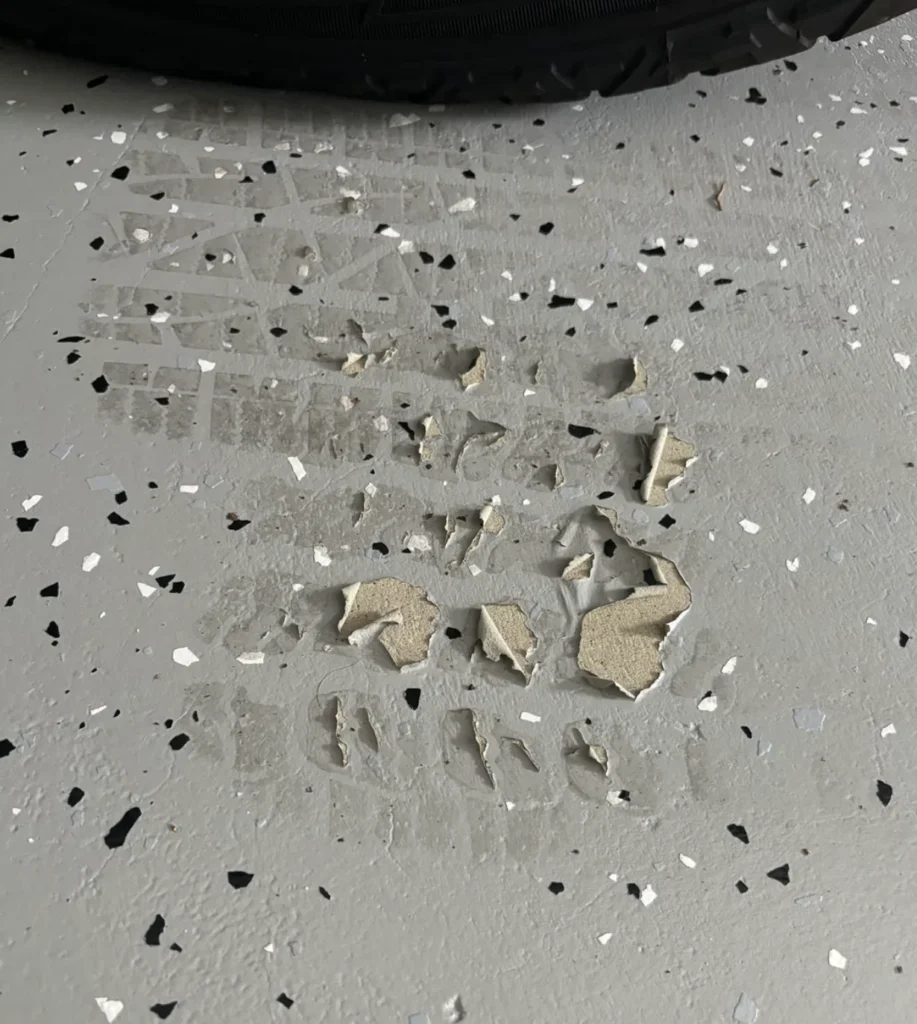
In the summer, your tires get hot — over 140°F on hot Kansas City pavement. When you park a hot tire on a thin coating, the coating softens. As the tire cools, it grips the soft coating and pulls it up.
This is called hot tire pickup, and it’s the #1 reason DIY garage kits fail in the first year. It almost never happens to professional polyaspartic, because polyaspartic is thicker, harder, and chemically bonded into the concrete pores instead of sitting on top of them.
What It Actually Costs to Fix
Here’s the math nobody likes to hear.
- Your DIY kit: about $300
- Removing the failed coating (grinding it off): $1.50–$3.00 per square foot, or $750–$1,500 for a 2-car garage
- Real professional polyaspartic install: $5–$12 per square foot, or $2,500–$6,000 for a 2-car garage
If you bought the DIY kit, watched it fail, then hired a pro, you’ll spend $3,500 to $8,000 total — when you could have spent $2,500 to $6,000 once. That’s a $2,000+ “DIY tax” most people pay without realizing it.
The good news: a properly installed polyaspartic floor lasts 15 to 20 years. Once you do it right, you’re done.
Why We Don’t Install Epoxy at Garage Flex
Garage Flex was started by the Kimminau Floors team after 20 years of installing the highest quality flooring in Kansas City.
We install polyaspartic only. It’s simply the highest quality garage floor coating available. Every job starts with a moisture test, a diamond grind, and a written warranty backed by industrial-grade products. The coating bonds chemically into the concrete — which means it doesn’t peel, even after Kansas City winters of road salt and freeze-thaw cycles.
Ready for a Floor That Actually Lasts?
If you’re staring at a peeling DIY mess in your garage right now, the next step is simple: request a free in-home assessment. We’ll measure your slab, run a moisture test, look at any failed coating, and give you a written quote — no pressure.
You only want to do this once. Let’s do it right.
Frequently Asked Questions
No. Any new coating you put over peeling epoxy will fail at the same rate the old one did, because the old coating is still detached from the concrete underneath. The only real fix is to grind off everything and start over.
Almost never. Standard homeowner policies don’t cover wear and tear or DIY product failures. A botched epoxy job is treated as a maintenance issue, not damage.
For a typical 2-car garage in the Kansas City metro, a full grind-off takes 3 to 5 hours. We can usually grind in the morning and start the new install the same afternoon, finishing in a single day.
Yes, by every measure. Polyaspartic costs about 30% more upfront than a thick epoxy system, but it lasts 3 to 5 times longer, won’t yellow in sunlight, resists road salt, and shrugs off hot tires. Cost per year of life, it’s the cheapest option on the market.
A properly installed polyaspartic system in the Kansas City metro should last 15 to 20 years with normal use. We back our installs with a written warranty.