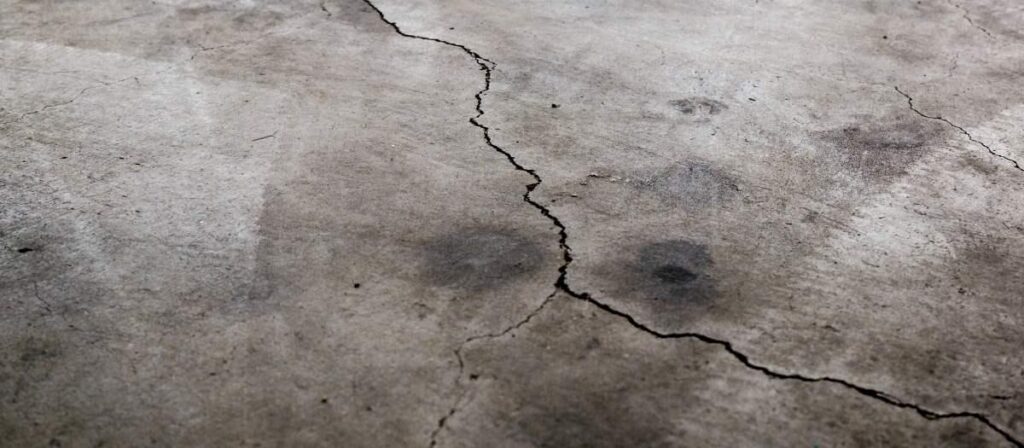
If you’re a homeowner in Kansas City or anywhere in the Midwest, garage floor cracks are common. But common doesn’t mean harmless.
Some cracks are cosmetic. Others signal soil movement, moisture pressure, or structural stress beneath your slab. Knowing the difference determines whether you need a simple repair — or a serious fix before damage spreads.
Quick Summary:
Garage floors crack due to shrinkage, freeze–thaw expansion, soil settlement, poor reinforcement, or moisture vapor pressure. Proper repair addresses the root cause — not just the visible crack.
Why Is My Garage Floor Cracking?
Garage floors crack because concrete shrinks as it cures, expands during freeze–thaw cycles, shifts when soil settles, or absorbs moisture from below. In Midwest climates like Kansas City, freeze–thaw damage and poor subgrade preparation are the most common causes.
The 5 Most Common Reasons Garage Floors Crack
- Shrinkage during curing
- Freeze–thaw cycles
- Poor subgrade compaction
- Improper reinforcement
- Moisture vapor pressure
Concrete is extremely strong in compression but weak in tension. When internal tensile stress builds, the slab relieves that stress by cracking.
1. Shrinkage During Curing
As concrete hydrates and dries, it shrinks slightly. If control joints weren’t spaced or cut properly, the slab creates its own relief joints — cracks.
Shrinkage cracks are typically:
- Thin (hairline)
- Fairly straight
- Stable over time
Shrinkage itself is normal. Poor joint planning is not.
2. Freeze–Thaw Cycles (Midwest Damage)
Kansas City winters are especially hard on concrete.
Water from snow and rain enters the slab’s pores. When temperatures drop, water expands about 9% as it freezes, creating internal pressure. Over repeated cycles, the surface cracks, flakes, or scales (spalling).
Deicing salts accelerate deterioration by increasing moisture retention and weakening the surface paste.
Signs of freeze–thaw damage include:
- Flaking or scaling
- Pitting
- Spider-web cracking
3. Poor Subgrade Preparation
Concrete depends on stable soil.
If the base wasn’t properly compacted:
- Soil settles
- Voids form
- Vehicle weight creates bending stress
- Cracks widen
Settlement cracks are often wider than 1/8 inch and may show vertical displacement. If one side of a crack sits higher than the other, movement is likely ongoing.
4. Improper Reinforcement
Rebar, wire mesh, or fibers help control crack width — but they do not prevent cracking.
If reinforcement was misplaced or insufficient, cracks can open wider than intended. Wide cracks allow water intrusion, accelerating freeze–thaw damage.
5. Moisture Vapor & Hydrostatic Pressure
Groundwater beneath a slab can push moisture upward through concrete capillaries.
Warning signs:
- Efflorescence (white residue)
- Dark damp areas
- Coating failure
- Recurring cracks
Without moisture mitigation, surface repairs fail prematurely.
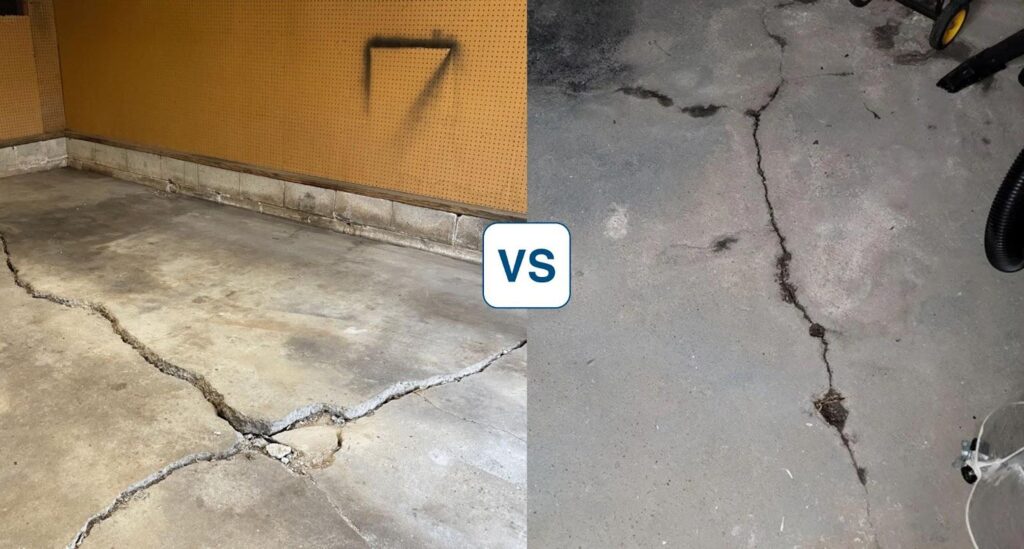
Cosmetic vs Structural Garage Floor Cracks
| Feature | Cosmetic Crack | Structural Crack |
| Width | Under 1/8 inch | Over 1/4 inch |
| Movement | Stable | Expanding |
| Vertical Offset | None | Often present |
| Repair Needed | Sealing | Structural repair |
Cracks extending into foundation walls warrant professional evaluation.
How to Repair Garage Floor Cracks (Step-by-Step)
- Measure crack width and check for vertical displacement
- Identify the root cause (shrinkage, settlement, or moisture)
- Route and clean the crack
- Apply the correct filler (epoxy or polyurethane)
- Stabilize the slab if settlement exists
- Seal or coat the surface to prevent water intrusion
Repair Methods Explained
Routing & Sealing (Stable Cracks)
The crack is widened slightly, cleaned, filled with a flexible professional-grade material, and ground smooth. This prevents water intrusion.
Epoxy Injection (Structural Bonding)
Low-viscosity epoxy bonds stable cracks and restores tensile strength. It does not fix soil settlement.
Polyurethane Injection (Active or Wet Cracks)
Flexible and moisture-tolerant, ideal when minor movement or water intrusion is present.
Slab Stabilization (Settlement Issues)
Expanding structural foam is injected beneath the slab to fill voids and restore support. Without stabilizing the base, cracks will return.
Why Most DIY Garage Floor Repairs Fail
DIY patch kits and hardware-store fillers treat the symptom, not the cause.
If moisture, movement, or freeze–thaw stress continues, cracks reopen — often within one to three Midwest winters.
Long-term repair requires correcting the underlying stress.
When Is Replacement Necessary?
Replacement may be required when:
- Multiple large structural cracks exist
- Severe settlement or heaving is present
- Extensive spalling weakens the surface
- Significant ongoing moisture problems remain
Older Midwest slabs often lack modern vapor barriers or reinforcement standards, increasing long-term risk.
Preventing Cracks from Returning
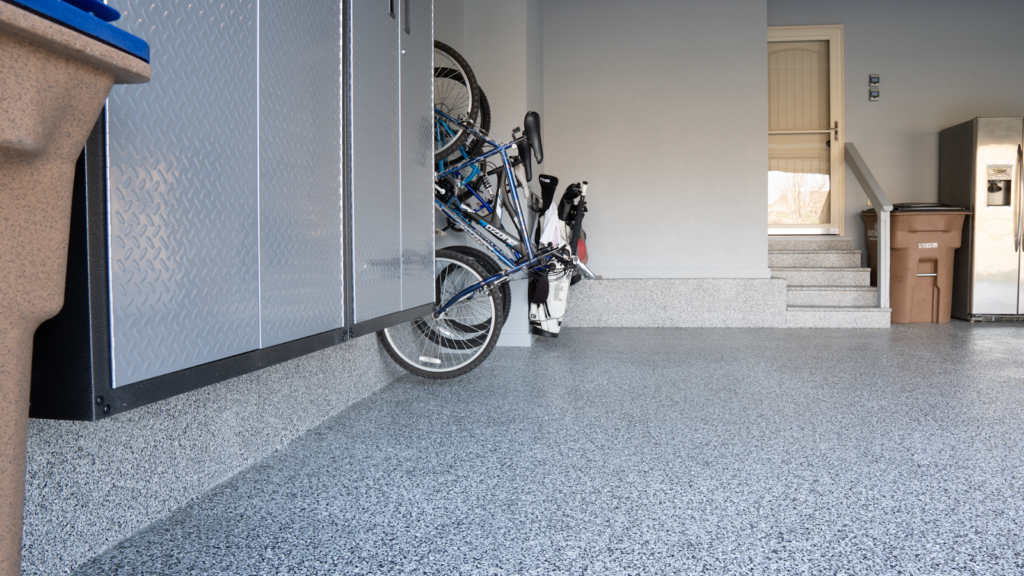
Repair is step one. Protection is step two.
- Seal exposed concrete to reduce water absorption
- Address moisture sources
- Install protective coatings
High-performance polyaspartic coatings:
- Bond to properly prepared concrete
- Create a moisture-resistant surface
- Tolerate minor temperature movement
- Resist salt damage
Coatings protect the surface — but they do not stop structural slab movement.
Frequently Asked Questions
Hairline shrinkage cracks are common. Wide or moving cracks may indicate structural issues.
If cracks exceed 1/4 inch, show vertical movement, or continue widening.
Minor stable cracks can sometimes be sealed, but DIY repairs often fail in freeze–thaw climates.
No. It protects the surface but does not correct slab movement.
The Bottom Line
Concrete cracks for physical reasons: shrinkage, soil movement, moisture pressure, and temperature stress.
The wrong repair hides the problem.
The right repair addresses the cause.
For Kansas City homeowners, early evaluation is critical. Freeze–thaw cycles turn small moisture-entry cracks into larger structural issues over time.If you’re in Kansas City and have questions about your garage floor, reach out to us!