If you’re upgrading your garage floor, durability is probably at the top of your list. You don’t want something that looks great for a year… then starts peeling, cracking, or wearing down.
So let’s settle it:
Between epoxy, paint, and polyaspartic garage floors — which one actually lasts the longest?
We’ll break it down in plain English, no sales fluff, and no chemistry degree required.
Quick Answer: Which Garage Floor Option Lasts the Longest?
Polyaspartic garage floor coatings last the longest overall, followed by epoxy, with paint coming in last — often by a wide margin.
But why that’s true (and when it matters) is where things get interesting.
Garage Floor Paint: The Short-Term Fix
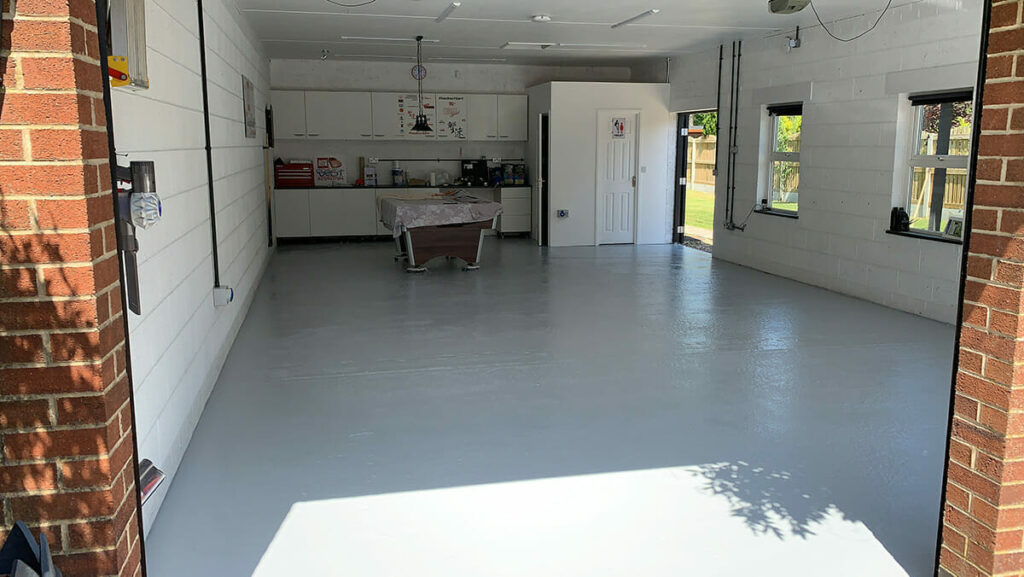
Typical lifespan: 1–3 years
Garage floor paint is the most budget-friendly option, which explains why it’s so common. It’s easy to apply, widely available at hardware stores, and looks decent… at first.
Why paint doesn’t last
- It sits on top of the concrete instead of bonding with it
- Hot tires soften it and cause peeling
- Moisture from concrete pushes it up
- Normal foot traffic wears it down quickly
What usually goes wrong
- Peeling and flaking
- Tire marks that won’t come off
- Dusting as bare concrete reappears
Bottom line: Paint is fine for a quick refresh, but it’s not built for long-term durability.
Epoxy Garage Floors: Durable, But With Limits
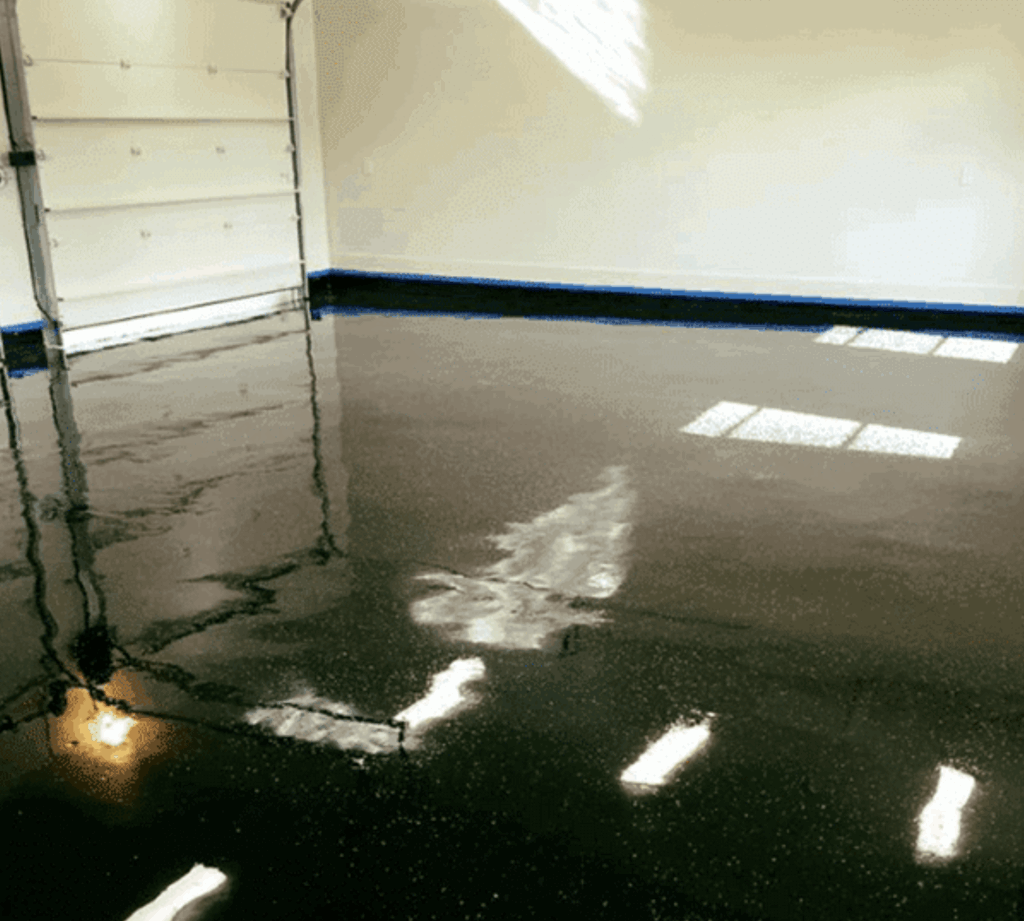
Typical lifespan: 5–10+ years (when installed correctly)
Epoxy has been the go-to garage floor upgrade for decades. It’s thicker than paint and chemically bonds to the concrete, creating a much harder surface.
Why epoxy lasts longer than paint
- Stronger bond to concrete
- Better resistance to chemicals and stains
- Thicker protective layer
Where epoxy struggles
- UV exposure can cause yellowing over time
- Hot tire pickup is still a risk
- Slower cure times increase chances of failure
- Sensitive to moisture during installation
Common epoxy failure signs
- Yellow or amber discoloration
- Peeling near garage doors
- Cracks telegraphing through the coating
Bottom line: Epoxy can last a long time, but only if prep, moisture conditions, and installation are nearly perfect.
Polyaspartic Garage Floor Coatings: Built for Longevity

Typical lifespan: 15–20+ years
Polyaspartic coatings are newer, but they’ve quickly become the gold standard for residential garages — especially when durability is the priority.
Why polyaspartic lasts the longest
- Highly flexible, so it moves with the slab instead of cracking
- Excellent resistance to UV rays (no yellowing) <- this is a biggie
- Handles hot tires without softening
- Cures fast, reducing moisture-related failures
Real-world durability advantages
- Holds up to daily vehicle use
- Resists road salt, oil, and chemicals
- Maintains color and finish for years
Bottom line: Polyaspartic isn’t just a coating — it’s a long-term concrete protection system.
Floor Coating Side-by-Side Durability Comparison
| Feature | Paint | Epoxy | Polyaspartic |
| Typical lifespan | 1–3 years | 5–10+ years | 15–20+ years |
| Hot tire resistance | ❌ Poor | ⚠️ Moderate | ✅ Excellent |
| UV stability | ❌ Poor | ❌ Can yellow | ✅ UV-stable |
| Moisture tolerance | ❌ Low | ⚠️ Moderate | ✅ High |
| Crack flexibility | ❌ None | ⚠️ Limited | ✅ Excellent |
What Really Determines How Long a Garage Floor Lasts
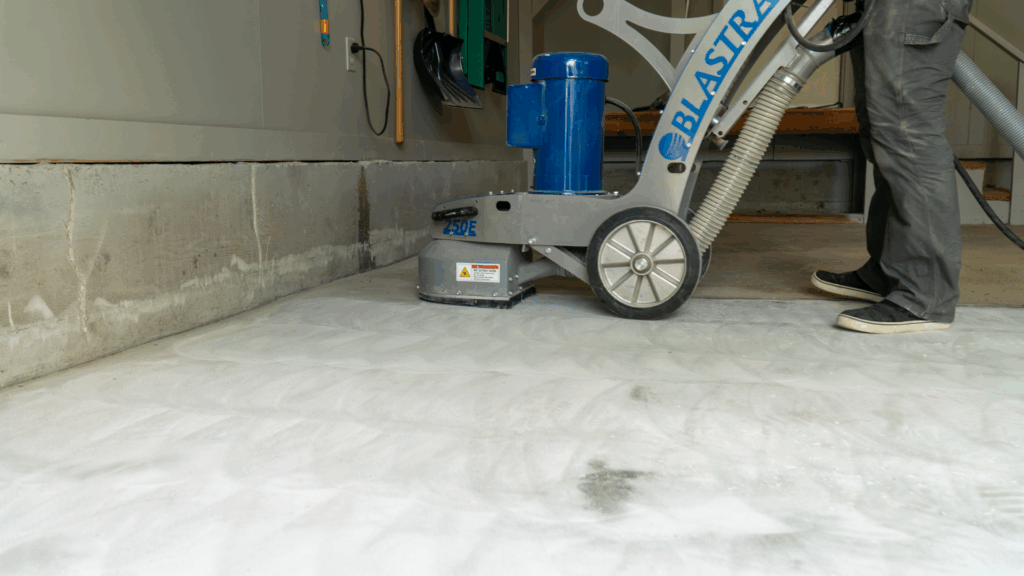
No matter which option you choose, longevity depends on a few key factors:
1. Surface preparation
If the concrete isn’t properly ground and cleaned, even the best coating will fail early.
2. Moisture in the slab
Concrete naturally holds moisture. Coatings that can’t handle vapor pressure tend to peel.
3. Daily use
Parking, turning tires, dragging equipment, and temperature swings all matter.
4. Installation quality
Professional installation dramatically increases lifespan — especially for epoxy and polyaspartic systems.
So… Which Garage Floor Should You Choose?
- Paint is just the cheapest short-term cosmetic upgrade, we really don’t recommend it.
- Choose epoxy if you want a solid mid-range option and understand its limits.
- Choose polyaspartic if you want the longest-lasting, lowest-maintenance garage floor available.
If durability is your main goal, polyaspartic clearly wins — not just on paper, but in real garages, year after year.
Built for Real Garages, Not Short-Term Fixes
A garage floor takes more abuse than almost any surface in your home. Choosing the right finish isn’t about what looks good today — it’s about what still looks good 10 or 15 years from now.
When it comes to longevity, resistance, and real-world performance, polyaspartic garage floors are the modern winners.
Ready for a garage floor that actually lasts? Garage Flex installs professional polyaspartic floor coatings built for real Kansas City garages — get a free quote today.